
The Pros and Cons of Waiving Contingencies in Today's Market

The Pros and Cons of Waiving Contingencies in Today's Market
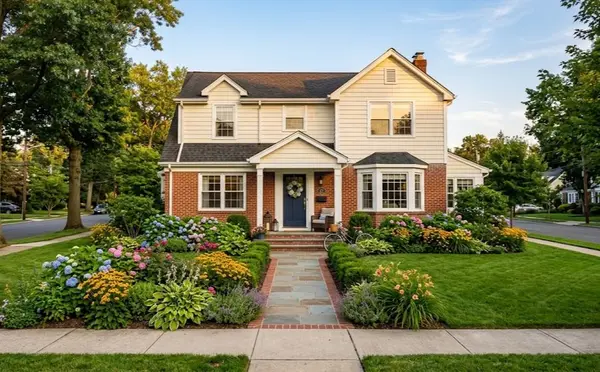
You find the perfect center hall Colonial in Ridgewood, a charming brick Tudor in Maplewood, or an expanded split level in Clifton.
The house checks every single box on your wishlist.
You ask your agent what it takes to win. Your agent delivers the sobering reality: there are already eight competing offers sitting on the kitchen counter. To stand out, the listing agent suggests waiving your contingencies.
Your stomach drops.
Waiving contingencies has become one of the most intense, talked about strategies in North Jersey real estate. In a competitive market where housing inventory remains under two months of supply and sale to list price ratios routinely cross 106 percent, buyers feel immense pressure to strip away their contractual protections just to get an offer accepted.
Is waiving contingencies a brilliant tactical maneuver that secures your dream home, or is it a financial gamble that could wipe out your life savings?
The truth lies somewhere in between.
Here is an honest, practical look at the pros and cons of waiving contingencies across Bergen, Essex, Passaic, and Hudson counties, along with smart middle ground strategies that protect your wallet while keeping your bid competitive.
The Big Three Contingencies in a New Jersey Contract
Before evaluating the risks, let us look at what standard contingencies actually do.
In a traditional New Jersey residential real estate contract, contingencies serve as legal safety valves. They allow you to walk away from the transaction and recover your earnest money deposit if specific conditions are not satisfied.
The three primary protections are:
- The Home Inspection Contingency: This grants you the legal right to hire licensed home inspectors to examine the physical, environmental, and mechanical condition of the property. If major structural defects, radon gas, buried oil tanks, or extensive termite damage are discovered, you can request repairs, ask for financial credits, or cancel the contract.
- The Appraisal Contingency: If you are taking out a mortgage, your lender will hire an independent licensed appraiser to verify that the home is worth the agreed purchase price. If the property appraises for less than your contract price, this clause allows you to renegotiate the purchase price or terminate the deal without penalty.
- The Mortgage Financing Contingency: This protects your deposit if your lender ultimately denies your loan application during the underwriting process, provided you applied in good faith.
The Obvious Pros: Why Buyers Waive Contingencies
In a seller market, cash is king, but certainty is queen.
Sellers evaluate offers based on two primary factors: the top line purchase price and the likelihood that the deal will actually cross the finish line without delays.
When you waive contingencies, you eliminate risk for the seller.
First, you gain a massive competitive edge over other buyers. A seller in Montclair or Paramus reviewing ten competing bids will often choose an offer with waived contingencies over an offer that is ten thousand dollars higher but loaded with escape hatches. Sellers know that traditional contingencies give buyers multiple opportunities to walk away or demand renegotiations weeks into the transaction.
Second, waiving contingencies demonstrates supreme financial confidence. It tells the seller and the listing agent that your financing is rock solid, your liquid assets are substantial, and you are fully committed to closing.
Third, it speeds up the closing timeline. Removing back and forth inspection negotiations and appraisal reviews can shave weeks off the transaction, allowing sellers to move forward with their own relocation plans with complete peace of mind.
The Hidden Cons: The Catastrophic Risks of Blanket Waivers
While waiving contingencies makes your offer look irresistible, doing so without a clear safety net can lead to financial disaster.
1. The Home Inspection Danger: Buying a Money Pit
Completely waiving the home inspection in an older North Jersey home is the real estate equivalent of skydiving without checking your parachute.
Our local architectural inventory is gorgeous, but much of it was constructed between 1900 and 1960. Older homes carry vintage mechanical quirks.
If you completely waive your inspection rights, you inherit every latent disaster hiding behind the walls.
What happens if an undocumented 550 gallon underground oil tank sits corroded beneath the front lawn? Environmental soil remediation under New Jersey Department of Environmental Protection oversight can easily cost fifty to eighty thousand dollars, completely out of pocket because standard homeowners insurance excludes pre existing soil contamination.
What if the main sewer line is crushed by tree roots under the street, requiring a twenty thousand dollar excavation? What if the roof structure has hidden framing rot or active knob and tube electrical wiring that insurance companies refuse to cover?
Waiving your inspection entirely means you absorb those catastrophic financial liabilities with zero legal recourse against the seller.
2. The Appraisal Shortfall: Coming Up with Instant Cash
When you waive the appraisal contingency, you promise to pay the agreed contract price regardless of what the bank appraiser says.
Imagine you submit a winning bid of $900,000 on a home listed at $825,000 in a bidding frenzy.
Three weeks later, the bank appraiser reviews recent closed neighborhood sales and values the property at $840,000.
Your mortgage lender will only base their eighty percent loan on the appraised value of $840,000, which comes out to a $672,000 loan. They will not lend based on your $900,000 contract price.
To close the deal, you must bring the entire $60,000 appraisal shortfall in cold hard cash on top of your standard down payment and closing costs. If you do not have an extra sixty thousand dollars sitting liquid in your bank account, you cannot close.
3. The Mortgage Trap: Forfeiting Your Earnest Money Deposit
Waiving the mortgage financing contingency without complete certainty is extraordinarily dangerous.
In North Jersey, earnest money deposits held in escrow typically equal five to ten percent of the total purchase price. On an $800,000 home, your deposit sits between forty and eighty thousand dollars.
If you waive the mortgage contingency and your loan is denied at the eleventh hour due to sudden corporate restructuring, a dip in credit score, or unexpected bank underwriting hurdles, you do not just lose the house.
The seller has the legal right to retain your entire earnest money deposit as liquidated damages for breaching the contract. Walking away from eighty thousand dollars of hard earned family savings is a devastating blow.
The Smart Middle Ground: Protecting Yourself While Staying Competitive
You do not have to choose between playing it completely safe and taking foolish gambles.
Experienced real estate agents and attorneys use smart hybrid strategies that give sellers the certainty they crave while keeping essential buyer guardrails firmly in place.
Strategy 1: The Major Defects Only Inspection Rider
Instead of waiving the inspection entirely, submit a custom inspection rider through your attorney during the three day review period.
State that you are conducting the inspection strictly for major structural, environmental, and mechanical defects, or safety hazards. Explicitly agree that you will not request repairs or credits for cosmetic flaws, normal wear, or items that are functional.
Alternatively, establish an inspection deductible. You agree that you will not request any repair credits unless an individual major defect exceeds $1,500 or $2,500.
This approach reassures the seller that you will not nickel and dime them over squeaky doors or old paint, while preserving your right to walk away if an abandoned oil tank or cracked foundation is uncovered.
Strategy 2: The Capped Appraisal Gap Guarantee
Rather than waiving the appraisal contingency completely, offer a capped appraisal gap guarantee.
You agree in writing to cover an appraisal shortfall up to a specific dollar limit that you can comfortably afford from your liquid savings.
For instance, you might promise to cover an appraisal gap up to $15,000 or $20,000. If the property appraises ten thousand dollars low, you bridge the gap with cash as promised. If the appraisal comes in fifty thousand dollars below contract price, you retain the legal right to renegotiate the price with the seller or cancel the transaction and recover your deposit.
This gives the seller tremendous confidence while placing a hard ceiling on your financial exposure.
Strategy 3: The Fully Underwritten Pre-Commitment
If you want to safely tighten your mortgage contingency timeline, complete your underwriting upfront.
Work with an experienced local lender who will submit your tax returns, bank statements, and credit documentation to a human underwriter before you write an offer.
With a fully underwritten pre approval commitment in hand, your lender has already approved your financial file. You only need a clean title and property appraisal to close. This allows your attorney to shorten the mortgage contingency period from thirty days down to fourteen or twenty one days, making your offer look almost as clean as cash.
Winning a home in North Jersey is about making smart, calculated moves. By pairing creative contract riders with thorough financial preparation, you can submit compelling, winning offers without gambling your family financial future.
Download our free buyers or sellers guide.
Ismael Rodriguez is a realtor at Real Broker. I cover all of North Jersey and specialize in Bergen, Essex, Passaic, and Hudson Counties.
Categories
- All Blogs (14)
- Bergen County (2)
- Bergen County Real Estate (3)
- Buying In NJ (5)
- Essex County Real Estate (5)
- FHA Loan (3)
- First Time Home Buyer (3)
- Homeownership (6)
- Hudson County (1)
- Ismael's Insights (6)
- Jersey City (1)
- Lionsgate (1)
- Local Events (3)
- Market Trends (3)
- News (3)
- Nj Lifestyle (4)
- NJ Market Trends (6)
- NJ Real Estate Law (1)
- North Jersey Real Estate (8)
- Passaic County Real Estate (2)
- Real Estate Tips (7)
- Real ID (1)
- Restaurants (1)
- Selling In NJ (2)
- Selling Your Home (3)
- Tariffs (1)
- Things to Do in NJ (5)
Recent Posts








GET MORE INFORMATION